
Digital Transformation in Structural Engineering: Future Trends and Opportunities
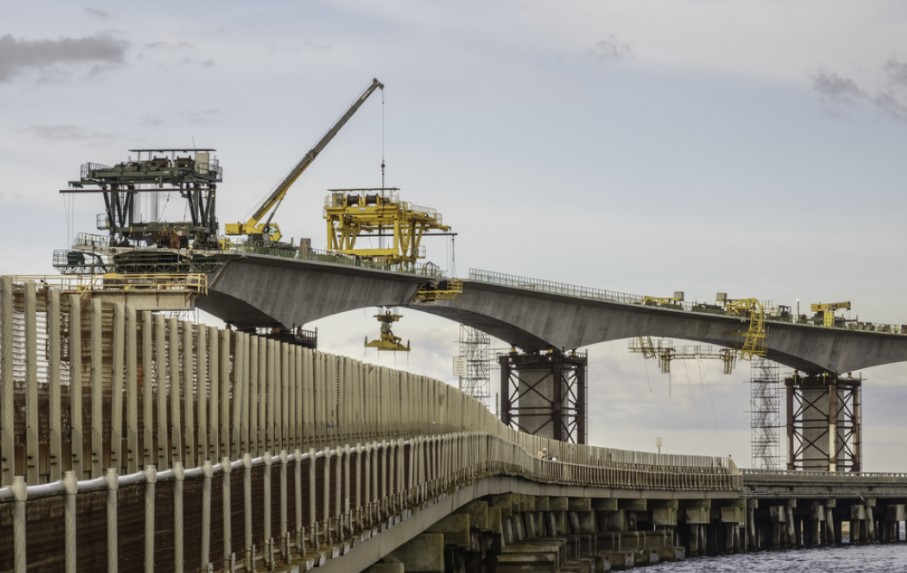
The Future of Structural Engineering: How Digital Technologies Are Reshaping Infrastructure Design
Introduction
Structural engineering has traditionally relied on empirical methods, engineering judgment, and manual calculations to design safe and efficient structures. However, the increasing complexity of infrastructure projects, urbanization, and sustainability demands are rapidly transforming how structural engineers work.
Today, digital technologies such as Building Information Modeling (BIM), Artificial Intelligence (AI), Finite Element Analysis (FEA), and digital twins are redefining structural engineering practice globally and across Africa.
This transformation presents new opportunities for improving safety, efficiency, sustainability, and project delivery.
The Shift from Conventional Design Approaches
Historically, structural design involved simplified assumptions and extensive manual calculations. While these methods remain important, modern projects increasingly require more advanced analytical approaches.
Contemporary structures such as:
- long-span bridges,
- high-rise buildings,
- offshore facilities,
- transportation systems,
require more sophisticated modeling techniques.
Digital engineering tools now allow engineers to simulate structural behaviour before construction begins.
Role of Building Information Modeling (BIM)
BIM has become one of the most influential technologies in structural engineering.
Benefits include:
- improved collaboration,
- clash detection,
- quantity extraction,
- better project visualization,
- reduced design errors.
Structural engineers can integrate reinforcement details, load paths, and construction sequencing within a single digital environment.
This reduces costly redesigns and improves coordination among project stakeholders.
Finite Element Analysis in Structural Design
Finite Element Analysis enables engineers to study complex structural behaviour under different loading conditions.
Applications include:
- slab analysis,
- bridge behaviour,
- impact loading,
- vibration studies,
- nonlinear analysis.
Modern FEA software allows engineers to investigate:
- stress concentrations,
- deflections,
- buckling,
- dynamic responses.
These capabilities have expanded the possibilities for optimized and safer designs.
Artificial Intelligence and Structural Engineering
Artificial intelligence is increasingly influencing engineering workflows.
Emerging applications include:
- predictive maintenance,
- structural health monitoring,
- automated design optimization,
- damage detection,
- construction scheduling.
Machine learning models can now estimate:
- concrete strength,
- structural performance,
- durability characteristics.
This creates opportunities for faster decision-making and data-driven engineering.
Sustainability Challenges
Structural engineers face increasing pressure to reduce environmental impacts.
Modern approaches include:
- low-carbon concrete,
- recycled materials,
- optimized structural systems,
- lifecycle assessment methods.
Sustainable design requires balancing:
safety, economy, constructability, and environmental responsibility.
Challenges Facing African Structural Engineering Practice
Several barriers still limit widespread digital adoption:
- limited access to software,
- inadequate training,
- high computational costs,
- infrastructure constraints.
However, increasing internet penetration and educational access are gradually improving adoption rates.
Preparing Future Structural Engineers
Future engineers require skills beyond conventional calculations.
Important competencies include:
- computational thinking,
- programming basics,
- BIM workflows,
- data analysis,
- AI literacy.
Universities and professional institutions must adapt curricula to meet changing industry requirements.
Conclusion
Structural engineering is entering a period of rapid transformation driven by digital technologies and sustainability requirements.
Engineers who combine traditional engineering principles with emerging technologies will be better positioned to solve Africa’s infrastructure challenges.
The future structural engineer is not only a designer of structures but also a manager of information, data, and innovation.

publisher@engineeriaafrica.com — New Contributor
View all posts →Engineeria Africa is Building Africa’s Engineering Community — And we want you to be part of it. Next →
Google Faces Lawsuit Over Alleged Use of YouTube Creators’ Music to Train AI
Related Articles
 Civil Engineering
Self-Healing Concrete: Is Bacillus Bacteria the Future of Pavemen…
1. The $20 Billion Problem: Why Pavement Fails Concrete is the most widely used…
publisher@engineeriaafrica.com